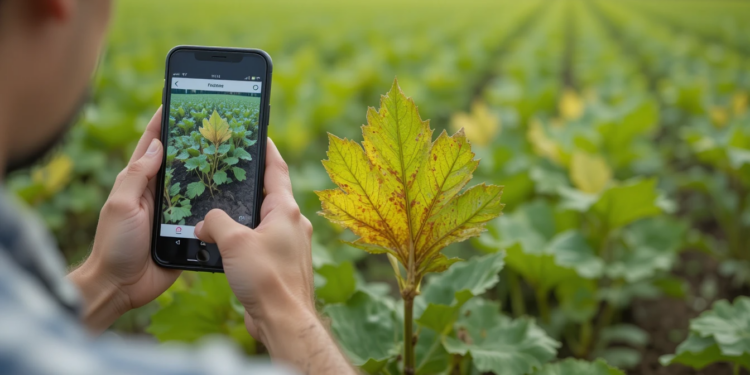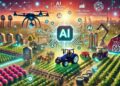
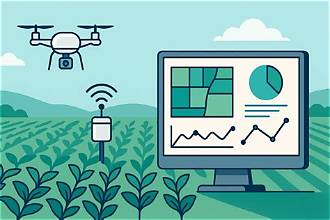
In an era defined by climate uncertainty, rising input costs, labor shortages, and the urgent need to produce more food on less land, digital farm platforms have emerged as one of the most practical tools for improving agricultural productivity. These platforms combine sensors, satellite imagery, artificial intelligence, cloud computing, mobile applications, and machinery data to help farmers make better decisions at every stage of the growing cycle. The result is not simply technology for its own sake; it is measurable improvement in yield, efficiency, sustainability, and profitability.
A digital farm platform is more than a single app or a dashboard. It is an ecosystem that connects fields, machines, people, and data. It gathers information from soil moisture probes, weather stations, drones, tractors, harvesters, and even manual scouting reports. It then transforms that raw data into actionable recommendations: when to plant, where to irrigate, how much fertilizer to apply, which fields are at risk from pests, and when to harvest for maximum quality. By aligning daily operations with field-level reality, these platforms help farmers reduce waste, respond faster to threats, and capture more of the yield potential already present in their crops.
The global food system faces a difficult equation. The population continues to grow, diets are shifting, and arable land is under pressure from urbanization, degradation, and drought. At the same time, farmers must cope with volatile weather, stricter environmental rules, and consumers who want traceable, sustainable food. Digital farm platforms do not solve every problem, but they provide a scalable way to improve yields without simply expanding cultivated area or pouring on more chemicals. They make farming more precise, more predictive, and more responsive.
Why Yield Gaps Persist
Most farms do not achieve the maximum yield their soil, climate, and crop genetics could theoretically support. This difference between potential yield and actual yield is called the yield gap. It exists for many reasons. Some fields receive too much water while others receive too little. Fertilizer may be applied uniformly across a field even though nutrient needs vary from meter to meter. Pests and diseases may be detected too late. Planting may happen at a suboptimal time. Harvest may be delayed by weather or machinery breakdowns. Labor may be unavailable at critical moments.
Traditional farming relies heavily on experience, intuition, and generalized recommendations. Those methods can work well, but they cannot easily process the thousands of variables that affect a modern field. A farmer may manage dozens or hundreds of hectares, each with different soil types, slopes, drainage patterns, and microclimates. Human observation is essential, but it is limited by time and distance. Digital platforms extend the farmer’s senses and memory. They monitor continuously, remember historical patterns, and compare current conditions with past seasons. That continuous intelligence is what allows yield gaps to shrink.
How Digital Platforms Improve Yield
Digital farm platforms improve yield through a cycle of measurement, analysis, recommendation, action, and verification. First, they measure conditions in and around the field. Second, they analyze those measurements using agronomic models and machine learning. Third, they recommend specific actions, such as adjusting irrigation or applying a targeted treatment. Fourth, the farmer or automated machinery carries out the action. Fifth, the platform measures the outcome and learns from it. This feedback loop becomes more accurate over time.
The most successful platforms do not overwhelm farmers with data. They prioritize. They answer questions such as: Which field needs attention today? Which pest is most likely to spread this week? Is the soil moisture level below the optimal threshold? Should I apply nitrogen now or wait for rain? By turning complex data into clear choices, digital platforms make precision agriculture practical rather than theoretical.
Architecture of a Yield-Boosting Platform
A typical digital farm platform is built from several layers that work together. These layers can be understood as follows:
A. Edge layer: This includes sensors, cameras, drones, GPS receivers, and machine controllers that sit in the field or on equipment. They collect raw data on soil, plants, weather, and operations.
B. Connectivity layer: This includes cellular networks, Wi-Fi, LoRaWAN, satellite links, and other communication channels that move data from the field to the cloud. Reliable connectivity is essential, especially in rural areas.
C. Intelligence layer: This includes cloud servers, data pipelines, agronomic models, and artificial intelligence algorithms. It cleans, stores, and analyzes data to produce insights.
D. Application layer: This includes mobile apps, web dashboards, and machine interfaces that deliver recommendations to farmers, agronomists, and operators.
E. Integration layer: This includes APIs and standards that allow the platform to connect with tractors, irrigation systems, accounting software, weather services, and supply chain partners.
When these layers are well designed, the platform becomes a central nervous system for the farm. It can operate at field scale, farm scale, or even regional scale. It can support a single smallholder with a smartphone or a large enterprise with hundreds of connected machines.
Data Sources That Power the Platform
The quality of a digital farm platform depends on the quality and diversity of its data. Important sources include soil moisture and temperature sensors, weather stations, satellite imagery, drone photography, yield monitors on harvesters, GPS tracking on tractors, variable-rate controllers on sprayers and spreaders, and manual observations from scouts. Each source adds a different perspective.
Satellite imagery, for example, can reveal variability in crop vigor across a field through vegetation indices. Drones can capture high-resolution images to detect disease or nutrient stress. Soil sensors can show whether root zones are too dry or too wet. Yield monitors can map productivity during harvest, showing which parts of a field performed well and which lagged behind. When these data streams are combined, the platform can identify cause-and-effect relationships that would be invisible to the naked eye.
Analytics and Artificial Intelligence
Artificial intelligence is what turns data into foresight. Machine learning models can predict pest outbreaks, disease risk, irrigation needs, and optimal harvest windows. Computer vision can count plants, detect weeds, and assess crop damage. Optimization algorithms can design the most efficient routes for machinery, the best seeding rates for different zones, and the most cost-effective fertilizer plans.
These models are not perfect, but they improve as more data is collected. A platform that has monitored ten seasons in a region will generally outperform one that has monitored only one. This creates a virtuous cycle: more users generate more data, which improves the models, which attracts more users. For farmers, the practical benefit is better decisions with less guesswork.
Yield Optimization Levers
Digital farm platforms boost yield through several specific levers. These can be grouped as follows:
A. Precision planting: The platform recommends the best planting date, seed variety, seeding rate, and row spacing for each field zone. This helps establish a uniform, healthy stand.
B. Variable-rate fertilization: Instead of applying the same amount of fertilizer everywhere, the platform divides the field into management zones and prescribes different rates. Nutrients go where they are needed, reducing waste and improving crop growth.
C. Smart irrigation: Soil moisture sensors and weather forecasts determine exactly when and how much to irrigate. This prevents both drought stress and overwatering, which can leach nutrients and harm roots.
D. Pest and disease management: Early warning models use weather, humidity, temperature, and crop stage to predict outbreaks. Farmers can then treat only affected areas, reducing chemical use and protecting yield.
E. Harvest optimization: The platform monitors crop maturity, moisture, and weather to recommend the best harvest window. It also coordinates machinery and logistics to reduce losses.
F. Soil health monitoring: Continuous data on organic matter, compaction, pH, and nutrient levels helps farmers make long-term decisions that improve productivity.
G. Crop rotation and diversification: Historical data and simulation models can suggest rotations that break pest cycles, improve soil fertility, and increase overall farm output.
H. Post-harvest management: Sensors in storage facilities monitor temperature and humidity to prevent spoilage. The platform can also connect farmers to buyers, reducing losses after harvest.
Each lever contributes to yield, but the greatest gains often come from combining them. A field that is planted precisely, fertilized variably, irrigated intelligently, and harvested at the right time will almost always outperform a field managed with uniform, calendar-based practices.
Real-World Scenarios
Consider a medium-sized grain farm in a region with unpredictable rainfall. Before adopting a digital platform, the farmer irrigates on a fixed schedule and applies fertilizer uniformly. Yields are average, but input costs are high. After installing soil moisture sensors and connecting the irrigation system to the platform, the farmer receives daily recommendations. Water use drops by twenty percent, while yields increase because crops experience less stress during critical growth stages.
Now consider a cooperative of smallholder farmers. Each farmer has less than two hectares, but they share a digital platform through a mobile app. The platform provides weather alerts, pest warnings, and market prices. Extension officers use the same data to target their advice. Because the cooperative aggregates data, it can also negotiate better prices and access credit. Yields rise gradually, but incomes rise faster because losses are reduced.
In a large commercial operation, the platform integrates with tractors, sprayers, and combines. Variable-rate technology adjusts inputs automatically. Drones scout fields after storms. The farm manager sees a real-time map of operations and can redirect machinery to the most urgent areas. The result is higher efficiency, fewer overlaps, and better use of every hectare.
Economic Impact

The economic case for digital farm platforms is strong when implemented correctly. Yield increases of five to fifteen percent are common in well-managed trials, depending on crop and region. Input savings can be equally significant. Less fertilizer, less water, less fuel, and less pesticide mean lower costs. Labor can be redeployed to higher-value tasks. Machinery can be used more efficiently, reducing ownership and maintenance costs per hectare.
There is also a revenue advantage. Buyers increasingly want proof of sustainable practices. A digital platform can provide records of water use, chemical applications, and traceability. This can open access to premium markets, sustainability-linked loans, and insurance products. In some regions, carbon credits can be generated from improved practices, creating an additional income stream.
The return on investment depends on farm size, crop type, and the cost of the platform. Small farms may benefit most from shared or cooperative models. Large farms can justify more advanced sensors and automation. In both cases, the key is to start with a clear problem, measure the baseline, and scale only what proves profitable.
Environmental Impact
Digital farm platforms are not only about yield. They also support environmental sustainability. Precision irrigation reduces water withdrawal from rivers and aquifers. Variable-rate fertilization reduces nutrient runoff that can pollute waterways and create dead zones. Targeted pest control protects beneficial insects and reduces chemical load. Better soil management increases carbon storage and improves soil structure.
These environmental benefits are becoming more important as regulators and consumers demand accountability. A digital platform provides the data needed to demonstrate progress. It can show that a farm used less water per ton of grain, applied fewer chemicals, or reduced greenhouse gas emissions. That evidence can be used for compliance, certification, and brand reputation.
Social and Operational Benefits
Beyond yield and profit, digital platforms improve the daily experience of farming. They reduce uncertainty. Farmers can check field conditions from a phone instead of walking every acre. They can receive alerts before a problem becomes a crisis. They can share data with agronomists, veterinarians, and advisors, enabling faster collaboration.
For farm workers, platforms can make tasks clearer and safer. Machine operators receive precise instructions. Maintenance alerts prevent breakdowns. Harvest crews know which fields to prioritize. For farm managers, the platform provides a historical record that supports planning, budgeting, and succession. When a new manager takes over, the data remains.
Digital platforms can also improve access to finance. Lenders and insurers are more willing to serve farmers who can provide verifiable production and risk data. In some developing regions, platform data is used to build credit scores for smallholders who lack formal collateral. This can unlock capital for seeds, equipment, and irrigation.
Challenges and Risks
No technology is without challenges. Digital farm platforms face several obstacles. The cost of sensors, connectivity, and subscriptions can be prohibitive for small farms. Rural broadband may be unreliable. Data ownership and privacy are major concerns. Farmers want to know who owns their data and how it will be used. Interoperability is another problem; different machines and software may not communicate easily.
There is also a skills gap. Using a digital platform requires digital literacy, data interpretation, and trust. Some farmers are skeptical of recommendations that conflict with traditional knowledge. Change management is therefore as important as technology. Training, local support, and clear evidence of benefits are essential.
Finally, technology can fail. Sensors can break. Algorithms can make mistakes. Cybersecurity threats can disrupt operations. A resilient platform must include fallback plans, human oversight, and strong data protection. Farmers should never become completely dependent on a single system without understanding the underlying agronomy.
Implementation Roadmap
For farms and organizations considering a digital platform, a structured approach improves the chances of success. The following roadmap uses lettered steps:
A. Assess current operations: Identify the biggest yield-limiting factors, such as water, nutrients, pests, or timing. Establish a baseline for yield, input use, and costs.
B. Benchmark against peers: Compare performance with similar farms or regional averages. This reveals where the greatest opportunities lie.
C. Choose the right platform: Look for one that fits the crop, climate, budget, and technical capacity. Prioritize interoperability and local support.
D. Deploy in phases: Start with a pilot field or a single use case, such as soil moisture monitoring or variable-rate fertilization. Do not try to digitize everything at once.
E. Train users: Provide hands-on training for farmers, agronomists, and machine operators. Build confidence through quick wins.
F. Iterate based on evidence: Measure results, collect feedback, and adjust. Drop features that do not add value.
G. Scale successful practices: Expand to more fields, crops, or farms once the pilot proves profitable.
H. Sustain and improve: Regularly update software, calibrate sensors, and review data privacy policies. Keep learning.
This roadmap is not linear. Farmers may cycle back to earlier steps as conditions change. The important principle is to let agronomic goals drive technology choices, not the other way around.
Future Trends
The future of digital farm platforms is likely to be even more integrated and autonomous. Artificial intelligence will become better at explaining its recommendations, which will increase trust. Robotics will handle more planting, weeding, and harvesting tasks. Digital twins, which are virtual replicas of fields and farms, will allow farmers to simulate different scenarios before acting. Blockchain and distributed ledgers may improve traceability and carbon accounting. Satellite constellations will provide more frequent and higher-resolution imagery.
We may also see greater consolidation and specialization. Some platforms will focus on agronomy, others on machinery, finance, or sustainability. APIs will connect them into a seamless experience. For farmers, the ideal future is not one platform that does everything, but an open ecosystem where data flows securely and value is shared fairly.
Conclusion
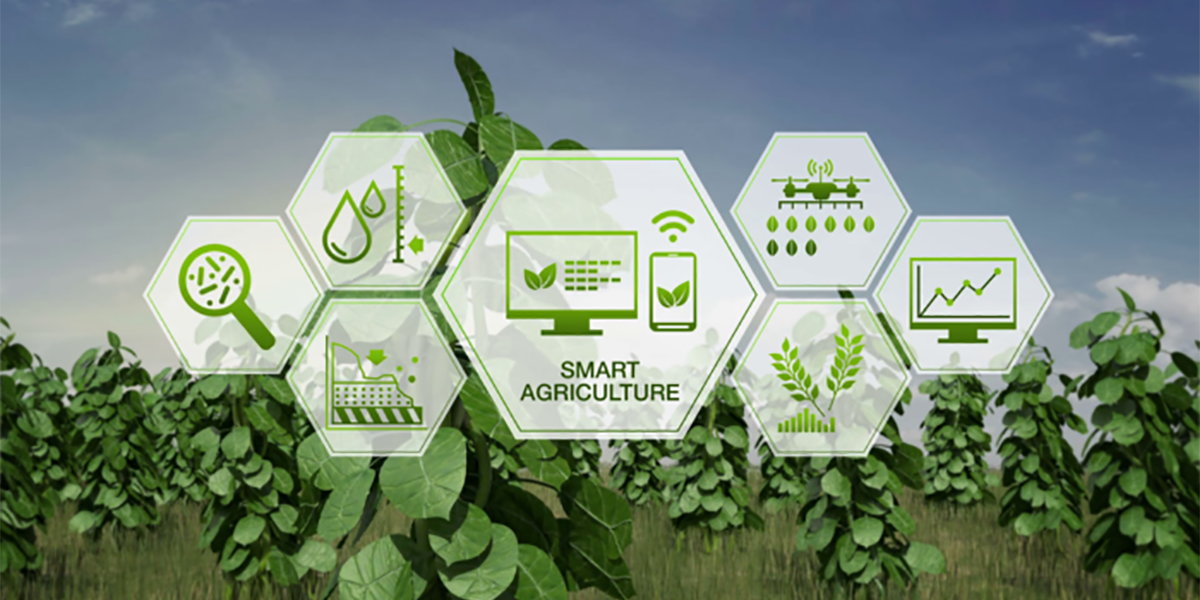
Digital farm platforms are transforming agriculture from a series of isolated decisions into a connected, data-driven system. By combining sensors, connectivity, analytics, and user-friendly applications, they help farmers close yield gaps, reduce waste, and respond to changing conditions with speed and confidence. They support economic profitability, environmental sustainability, and social resilience. They are not a silver bullet, and they require investment, training, and trust. But when implemented thoughtfully, they deliver what the title promises: a digital farm platform that boosts yield.
As the global demand for food continues to rise, the farms that thrive will be those that use information as effectively as they use land, water, and labor. Digital platforms are the tools that make that possible. The challenge is no longer whether to adopt them, but how to adopt them wisely, equitably, and at scale.