Every growing season, farmers confront a quiet enemy that rarely announces itself. Crop disease can begin with a few discolored leaves, a faint patch of mildew, or a subtle change in how a plant uses water. By the time the problem is visible to the naked eye, it may already have spread across a field, reducing yield, raising costs, and forcing farmers to use more chemicals than necessary. This is why one of the most promising developments in modern agriculture is the use of artificial intelligence to detect crop disease earlier, faster, and more accurately. The so-called AI farm trick is not a single gadget or a secret formula. It is a practical combination of images, sensors, machine learning, and farm knowledge that turns everyday tools into an early-warning system for plant health.
The idea is simple but powerful: give a computer many examples of healthy and diseased crops, teach it to recognize patterns, and then let it examine new images or sensor readings from the field. When the system notices signs of infection, it alerts the farmer. The farmer can then inspect the area, confirm the diagnosis, and take targeted action. This approach can reduce the spread of disease, lower pesticide use, protect profits, and support more sustainable farming. It also helps farmers make decisions in hours rather than days, which is often the difference between a small problem and a major outbreak.
The Hidden Cost of Late Detection
Crop diseases are costly because they are often invisible in the early stages. Fungal spores, bacteria, and viruses can multiply quietly on leaves, stems, roots, and fruit. A farmer may notice symptoms only after the pathogen has established itself. At that point, options are limited. Spraying the entire field may be necessary, even though only a small section is affected. That wastes money, adds chemical load to the environment, and may contribute to resistance. Late detection also reduces yield quality. A field that looks mostly green may still produce smaller fruit, lower grain weight, or lower market value.
AI changes the economics of detection. Instead of relying only on human scouting, which is time-consuming and limited by field size, AI can scan thousands of images in minutes. It can compare leaf color, texture, shape, and lesion patterns against known disease signatures. It can also combine visual data with weather data, soil moisture, humidity, and temperature to estimate disease risk. This makes it possible to catch problems before they become obvious. For many farmers, that early warning is the real trick: not magic, but timely intelligence.
What the AI Farm Trick Really Means
The phrase “AI farm trick” can be misleading if it suggests a shortcut that replaces good farming. In reality, the best systems support the farmer rather than replace them. They are decision-support tools. They help prioritize where to look, when to spray, and which crops need attention. They do not eliminate the need for agronomic knowledge, field experience, or professional diagnosis. A good AI system acts like an extra pair of eyes that never gets tired, but the farmer still makes the final call.
The trick works because modern AI can learn from examples. If researchers feed a model thousands of photos of tomato leaves with early blight, late blight, and bacterial spot, the model begins to recognize subtle differences. It may notice that late blight produces irregular water-soaked lesions with fuzzy white growth, while early blight creates concentric rings. With enough diverse data, the model can generalize to new fields, new weather conditions, and new camera angles. This is the foundation of computer vision in agriculture.
How the Detection Pipeline Works
A typical AI crop disease detection system follows a structured pipeline. Each stage matters, and weaknesses in one stage can reduce accuracy in the field. The process usually looks like this:
A. Data collection begins with images from smartphones, drones, robots, or fixed cameras. Farmers or scouts capture leaves, stems, and fruit from different angles and at different growth stages.
B. Preprocessing cleans the images by removing blur, adjusting brightness, cropping the plant area, and labeling healthy or diseased tissue. Good labeling is essential because the model learns from these examples.
C. Model training uses deep learning networks, such as convolutional neural networks, to identify patterns linked to specific diseases. The model may also use transfer learning, where it starts with knowledge from general image recognition and then specializes in crops.
D. Field validation tests the model in real conditions, not just in a laboratory. This step checks whether the system works under changing light, wind, dust, and different plant varieties.
E. Alerting and action turn predictions into practical advice. The system may send a phone notification, mark a map with disease hotspots, or recommend a targeted treatment zone.
F. Feedback and improvement allow farmers and agronomists to correct mistakes. When the model is wrong, new images and notes help retrain it, making the system smarter over time.
This pipeline is not limited to leaves. AI can also analyze roots, soil, and canopy structure. It can detect nutrient deficiencies, pest damage, and water stress, which often resemble disease symptoms. That broader view helps farmers avoid false alarms and choose the right response.
Smartphones Turn Every Farmer into a Scout
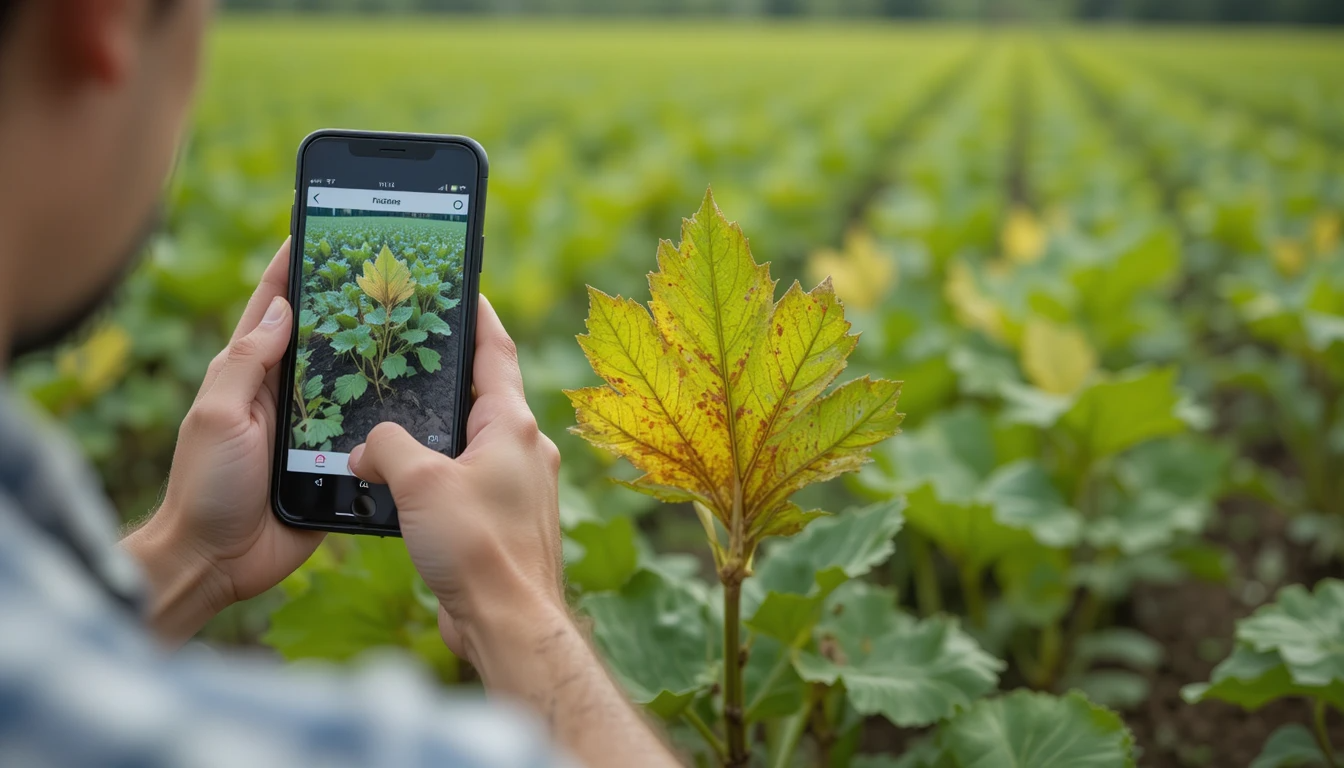
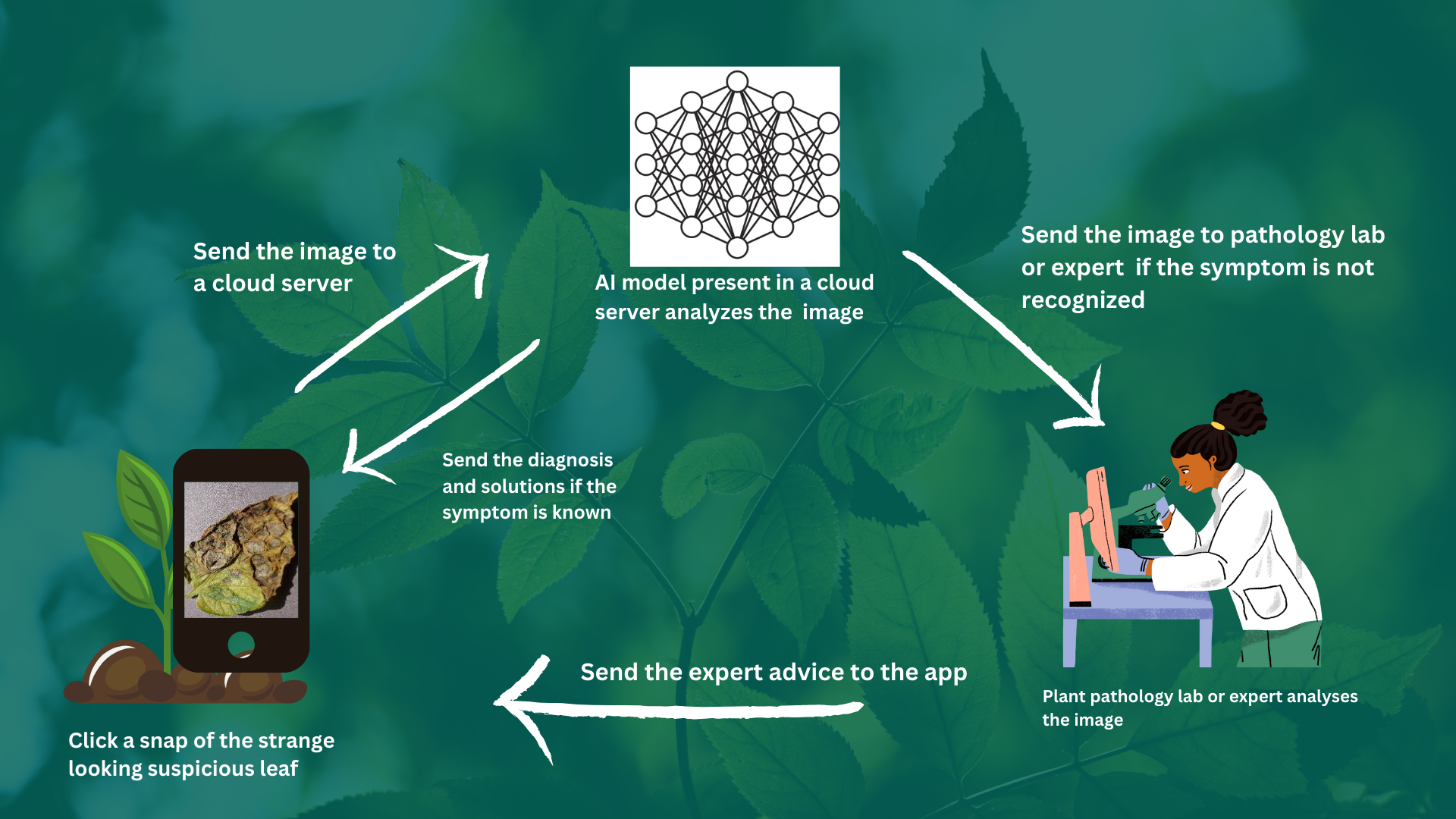
One of the most accessible AI farm tricks is the smartphone. Millions of farmers already carry a powerful camera and internet connection. With a well-designed app, a farmer can take a photo of a suspicious leaf and receive a preliminary diagnosis within seconds. Some apps work offline using edge AI, which means the model runs directly on the phone without sending data to the cloud. This is important in rural areas with weak connectivity.
Smartphone-based detection is not perfect. A single photo may not capture the full context. The angle, lighting, and background can confuse the model. That is why the best apps ask users to take multiple photos and answer simple questions about crop type, location, and recent weather. They also show a confidence score and recommend confirmation by an expert. When used correctly, the smartphone becomes a first-line screening tool. It helps farmers decide whether to ignore a minor issue, monitor it, or call for help.
Drones, Satellites, and Multispectral Eyes
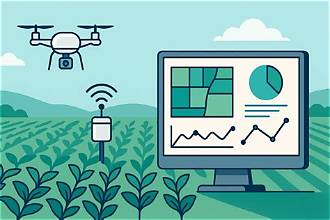
For larger farms, drones and satellites provide a wider view. A standard camera sees what humans see, but multispectral and hyperspectral sensors see beyond visible light. They can detect changes in chlorophyll, water content, and plant stress before symptoms appear. This is often called remote sensing. When AI analyzes these images, it can create maps of disease risk across an entire field.
Drones are especially useful because they fly below clouds and can capture high-resolution images. They can follow a fixed path, making it easier to compare images over time. Satellites offer less detail but can cover huge areas and provide frequent updates. Together, they help farmers spot patterns that would be impossible to see from the ground. For example, a subtle yellowing in one corner of a field may indicate an early fungal infection. AI can flag that area and guide a scout to inspect it.
IoT and Weather Data Make Prediction Stronger
Images are powerful, but they are not the only data source. Internet of Things sensors in the field can measure soil moisture, humidity, temperature, leaf wetness, and rainfall. These factors influence disease development. Many fungal pathogens need moisture and specific temperature ranges to infect plants. If the weather is favorable and the crop is susceptible, the risk of disease rises.
AI can combine sensor data with images to predict where disease is most likely to appear. This is sometimes called a disease forecast model. Instead of waiting for symptoms, the system can warn a farmer that conditions are ideal for infection. The farmer can then take preventive action, such as improving airflow, adjusting irrigation, or applying a targeted treatment. This predictive approach is more efficient than blanket spraying. It also supports integrated pest management, which aims to use biological, cultural, and chemical controls in a balanced way.
Edge AI in Tractors and Sprayers
Another important trend is edge AI. Edge computing means the AI model runs on the machine itself rather than in a distant data center. A tractor, sprayer, or robot can carry a camera and a small computer. As it moves through the field, it identifies weeds or diseased plants in real time. The sprayer can then apply treatment only where it is needed. This is called site-specific management.
The benefits are significant. Farmers use less chemical, save fuel, and reduce soil compaction because they do not need to cover the entire field repeatedly. Edge AI also works in areas with poor internet. It responds instantly, which is critical when a sprayer is moving. The challenge is that edge devices have limited power and memory, so the models must be efficient. Researchers are developing lightweight neural networks that can run on low-cost hardware without sacrificing too much accuracy.
Crop-by-Crop Examples
Different crops face different diseases, and AI systems are being tailored to each. Here are several examples:
A. Wheat and barley are vulnerable to rust diseases, septoria, and fusarium head blight. AI can analyze leaf images and spectral data to detect rust pustules and estimate severity.
B. Rice suffers from blast, bacterial leaf blight, and sheath blight. Drones can map flooded fields and identify patches with unusual color or texture.
C. Tomato and potato are affected by early blight, late blight, and bacterial spot. Smartphone apps are widely used because these crops are often grown on smaller farms.
D. Corn is threatened by northern leaf blight, gray leaf spot, and rust. AI models can classify lesions and help farmers decide whether fungicide is justified.
E. Grapevines face downy mildew, powdery mildew, and black rot. Hyperspectral imaging can detect infection before visible symptoms, which is valuable for high-value vineyards.
F. Citrus and other tree crops face greening, canker, and root rot. AI combined with drones can monitor large orchards and flag trees that need inspection.
These examples show that AI is not a generic solution. It must be trained on local crops, local diseases, and local growing conditions. A model that works well in one region may fail in another if the pathogen strains, plant varieties, or climate are different.
Why This Matters for Sustainability and Profit
The environmental and economic benefits of AI crop disease detection are closely linked. When farmers detect disease early, they can treat only the affected area. This reduces pesticide volume, protects beneficial insects, and lowers the risk of chemical runoff into water sources. It also reduces fuel use because fewer passes are needed. Over time, this supports soil health and biodiversity.
For farmers, the profit benefits are direct. Healthier crops produce higher yields and better quality. Lower chemical costs improve margins. Early action prevents severe outbreaks that could destroy an entire harvest. In high-value crops, such as grapes, vegetables, and specialty fruits, even a small improvement in disease control can mean a large financial difference. AI also helps with record-keeping. The system can log when and where disease appeared, which supports traceability and certification programs.
At a global level, AI crop disease detection contributes to food security. Climate change is shifting disease patterns. Pathogens are appearing in new regions, and extreme weather is stressing crops. AI can help farmers adapt faster by providing early warnings and localized recommendations. It can also support extension services, allowing experts to reach more farmers with fewer resources.
Challenges That Still Slow Adoption
Despite the promise, AI crop disease detection faces real barriers. Understanding these challenges helps farmers and technology providers plan better.
A. Data diversity is a major issue. Many models are trained on a limited set of images from one region or one variety. They may not perform well on different farms, seasons, or lighting conditions.
B. Connectivity remains a problem in rural areas. Cloud-based AI requires reliable internet, which is not always available. Offline and edge models help, but they may have lower accuracy.
C. Cost can be a barrier. Drones, sensors, and subscriptions add up. Smallholder farmers may not be able to afford them without cooperatives, subsidies, or shared service models.
D. Trust takes time. Farmers need to see that the system works. False positives can lead to unnecessary spraying, while false negatives can allow disease to spread. Transparency and expert validation are essential.
E. Privacy and data ownership matter. Farmers may worry about who owns their field data and how it is used. Clear agreements and secure storage are necessary.
F. Regulation and standards are still developing. There is a need for common benchmarks, certification, and liability rules when AI recommendations are wrong.
These challenges do not mean AI is useless. They mean it must be implemented carefully. The best projects involve farmers from the beginning, use local data, and combine AI with human expertise.
Practical Guide for Farmers
For farmers who want to try AI crop disease detection, a step-by-step approach is best. Consider the following actions:
A. Start small with a smartphone app or a simple drone mission. Test it on a few rows or a small plot before investing in a full-field system.
B. Capture consistent images. Use the same height, angle, and lighting when possible. Take photos of both healthy and diseased plants so the model can compare.
C. Combine AI with agronomy. Use the AI result as a clue, not a final diagnosis. Confirm with a local expert, extension officer, or laboratory test when needed.
D. Keep records. Note the date, location, crop stage, weather, and action taken. This data improves future predictions and helps measure return on investment.
E. Act early but avoid overreacting. If the system flags a hotspot, inspect it first. Treat only what is necessary, following integrated pest management principles.
F. Review results after harvest. Compare AI alerts with actual outcomes. Identify where the system helped and where it missed. Share feedback with the provider.
This practical approach reduces risk and builds confidence. It also helps farmers become active participants in improving the technology rather than passive users.
The Future of AI Crop Disease Detection
The future of this field is likely to be even more integrated. Generative AI could help farmers ask questions in natural language and receive tailored advice. Digital twins, which are virtual models of a farm, could simulate disease spread and test treatment scenarios before anything is applied. Robots could move through fields, identify diseased plants, and remove them mechanically. Drones could work in swarms to monitor large areas and deliver targeted treatments.
We may also see better fusion of data. A single platform could combine satellite imagery, drone scans, soil sensors, weather stations, and historical yield maps. AI would then provide a complete picture of crop health. Farmers could receive daily risk maps and prioritized action lists. The system could learn from every season, becoming more accurate over time.
However, the human element will remain central. Agriculture is complex, and no algorithm can fully capture every nuance of soil, climate, market, and tradition. The most successful AI systems will be those that empower farmers with clear information, respect their knowledge, and adapt to local realities. The AI farm trick is not about replacing the farmer. It is about giving the farmer a faster, sharper, and more reliable way to protect the harvest.
Conclusion
AI farm trick detects crop disease early by combining images, sensors, machine learning, and practical farm knowledge. It turns smartphones, drones, and IoT devices into an early-warning network. It helps farmers spot problems before they spread, reduce chemical use, save money, and protect yields. The technology is not perfect, and challenges such as data diversity, connectivity, cost, and trust must still be addressed. But the direction is clear. As AI becomes more accessible, it will become a standard tool in precision agriculture. For farmers, the smartest move is to learn how these systems work, test them carefully, and integrate them with good agronomic practice. The reward is a more resilient, profitable, and sustainable farm.