In the vast landscape of social media, where trends come and go with lightning speed, a peculiar farming technique has captured the world’s attention. Known as “bucket plowing,” this unconventional method has sparked millions of views, heated debates, and genuine curiosity among farmers, gardeners, and casual observers alike. At its core, bucket plowing represents the ingenious spirit of agricultural innovation a willingness to repurpose everyday objects to solve age-old problems. This article explores the origins, mechanics, benefits, and practical applications of this viral farming sensation, providing a comprehensive guide for anyone interested in understanding or replicating this remarkable technique.
A. What Exactly Is Bucket Plowing?
Bucket plowing, in its most basic form, refers to the practice of using a bucket typically a plastic or metal container as a makeshift plow or soil-preparation tool. Unlike traditional plowing, which involves heavy machinery or animal-drawn implements, bucket plowing leverages the humble bucket’s shape and capacity to manipulate soil, create planting holes, or even act as a rudimentary tillage device.
The technique gained viral status through social media platforms, particularly TikTok and Snapchat, where videos showcasing farmers using buckets in creative ways racked up millions of views. One particularly popular clip featured two men using a third man seated in a bucket as a makeshift plow to plant rice seedlings in a paddy field. The comedic yet resourceful nature of this method resonated with audiences worldwide, highlighting the ingenuity of rural communities who often must work with limited resources.
However, bucket plowing is more than just a viral gimmick. It represents a legitimate approach to small-scale soil preparation that has been used in various forms across different cultures for generations. From the rice paddies of Southeast Asia to the vegetable gardens of suburban backyards, the principles behind bucket plowing have proven remarkably versatile.
B. The Origins of the Viral Trend
The viral explosion of bucket plowing can be traced to several key factors that converged in the early 2020s. Social media platforms, particularly TikTok, created an environment where innovative farming hacks could reach global audiences instantly. Videos of farmers demonstrating clever, low-cost solutions to common agricultural challenges found a receptive audience hungry for practical, sustainable ideas.
One of the earliest viral bucket plowing videos featured a farmer in Indonesia using a simple plastic bucket to create perfectly uniform planting holes in a rice paddy. The video, which accumulated millions of views, showed the farmer pressing the bucket into the mud, twisting it slightly, and lifting it to reveal a perfectly shaped hole ready for a seedling. The simplicity and effectiveness of the technique captivated viewers, many of whom had never considered using a bucket for this purpose.
Another viral variant involved using buckets as makeshift plows themselves. In these videos, farmers would attach ropes or straps to a bucket and drag it through the soil, using the bucket’s edge to break up compacted earth and create furrows. While less precise than traditional plowing, this method proved surprisingly effective for small plots and garden beds.
The viral nature of these videos also sparked a broader conversation about agricultural innovation and the resourcefulness of farmers in developing regions. Viewers began sharing their own bucket-based techniques, creating a global community of DIY agricultural enthusiasts.
C. How Bucket Plowing Works: The Mechanics Explained
Understanding the mechanics of bucket plowing requires a closer look at the physics and soil dynamics involved. When a bucket is pressed into soil, several forces come into play that make it an effective tool for soil manipulation.
The primary mechanism behind bucket plowing is displacement. When the bucket’s edge contacts the soil, it creates a zone of compression. The soil beneath the bucket is compacted slightly, while the soil around the edges is displaced outward. This displacement creates a cavity the planting hole that is roughly the shape and size of the bucket’s base.
The twisting motion often demonstrated in viral videos serves a crucial purpose. By rotating the bucket slightly after pressing it into the soil, the farmer creates a clean separation between the soil inside the bucket and the surrounding soil. This makes it easier to lift the bucket without disturbing the hole’s walls, resulting in a neat, well-defined planting cavity.
For bucket plowing that involves dragging the bucket through soil, the mechanics are somewhat different. In this case, the bucket’s edge acts as a cutting blade, slicing through the soil and breaking up clods. The curved interior of the bucket helps to lift and aerate the soil, creating a looser, more workable seedbed. This method is particularly effective for preparing garden beds and small plots where traditional plowing equipment would be impractical.
The effectiveness of bucket plowing also depends on soil conditions. Moist, loamy soils respond best to this technique, as they hold their shape well when displaced. Dry, sandy soils may crumble, while heavy clay soils may require more effort to penetrate. Understanding these variables is essential for successful bucket plowing.
D. Step-by-Step Guide to Bucket Plowing
For those interested in trying bucket plowing themselves, the following step-by-step guide provides a practical framework for getting started. This guide assumes the use of a standard plastic bucket for creating planting holes, though the principles can be adapted for other bucket-based techniques.
D.1. Selecting the Right Bucket
The first step is choosing an appropriate bucket. Plastic buckets are generally preferred for their lightweight construction and ease of cleaning, though metal buckets can also work. The size of the bucket should match the intended planting hole smaller buckets for seedlings and herbs, larger buckets for tomatoes, peppers, or other substantial plants.
D.2. Preparing the Soil
Before beginning, the soil should be cleared of debris, rocks, and weeds. If the soil is particularly compacted, it may be beneficial to water it lightly a day before bucket plowing to soften it and make penetration easier. The goal is to create a workable surface that will hold the shape of the planting hole.
D.3. Marking the Planting Positions
For orderly gardens, it helps to mark where each planting hole will be created. This can be done using stakes, string lines, or simply by eyeballing the spacing based on the mature size of the plants. Proper spacing ensures that each plant has adequate room to grow and access to nutrients and water.
D.4. Pressing the Bucket into the Soil
With the bucket positioned at the first planting spot, apply downward pressure. For most soils, the weight of the body combined with a gentle pushing motion is sufficient to press the bucket into the ground. In harder soils, it may help to twist the bucket slightly as it is pressed down.
D.5. Creating the Planting Hole
Once the bucket is pressed to the desired depth typically about 10 to 15 centimeters for most seedlings give it a gentle twist to separate the soil inside from the surrounding soil. Then, lift the bucket straight up. The soil inside the bucket can be set aside for later use or added to a compost pile.
D.6. Refining the Hole
After lifting the bucket, inspect the planting hole. If the walls are too compacted, use a hand trowel or stick to gently loosen them. This encourages root penetration and helps the plant establish itself more quickly.
D.7. Planting and Watering
Place the seedling or seed into the prepared hole, backfill with soil, and water thoroughly. The bucket-created hole provides a perfect environment for the plant to begin its growth, with well-aerated soil and adequate space for root development.
D.8. Repeating the Process
Continue the process across the garden bed, spacing the holes according to the needs of the specific plants being grown. The bucket method is remarkably efficient, allowing a gardener to prepare dozens of planting holes in a fraction of the time it would take using traditional digging methods.
E. Advantages of Bucket Plowing
The popularity of bucket plowing is not without reason. This technique offers a range of advantages that make it particularly appealing to small-scale farmers, gardeners, and anyone seeking sustainable, low-cost solutions.
E.1. Cost-Effectiveness
Perhaps the most obvious advantage of bucket plowing is its cost. A basic plastic bucket costs a few dollars at most, and many households already have one. Compared to purchasing a tiller, plow, or other specialized equipment, bucket plowing represents a nearly zero-cost solution for soil preparation.
E.2. Accessibility for Small Spaces
Bucket plowing is ideal for small gardens, raised beds, and urban farming situations where space is limited and larger equipment cannot be used. The technique requires only a small area to operate, making it perfect for backyard gardeners and community plots.
E.3. Reduced Physical Strain
Traditional digging with a shovel or hoe can be physically demanding, particularly for those with back problems or limited mobility. Bucket plowing, especially when using a bucket with a comfortable handle or when kneeling, can reduce the strain on the body while still accomplishing the necessary work.
E.4. Uniformity of Planting Holes
The bucket method produces remarkably uniform planting holes, ensuring that each plant has the same amount of space and soil conditions. This uniformity can lead to more consistent growth and easier garden management.
E.5. Soil Aeration
The pressing and twisting action of the bucket helps to aerate the soil, creating spaces for air and water to penetrate. This improved soil structure benefits plant roots and promotes healthier growth.
E.6. Minimal Soil Disturbance
Unlike deep plowing, which can disrupt soil structure and bring weed seeds to the surface, bucket plowing disturbs only the soil immediately around the planting hole. This targeted approach preserves the existing soil ecosystem and reduces the likelihood of weed germination.
E.7. Environmental Benefits
By reducing reliance on fossil-fuel-powered equipment and minimizing soil disturbance, bucket plowing aligns with principles of sustainable agriculture. It is a technique that works with natural systems rather than against them.
F. Bucket Plowing vs. Traditional Methods
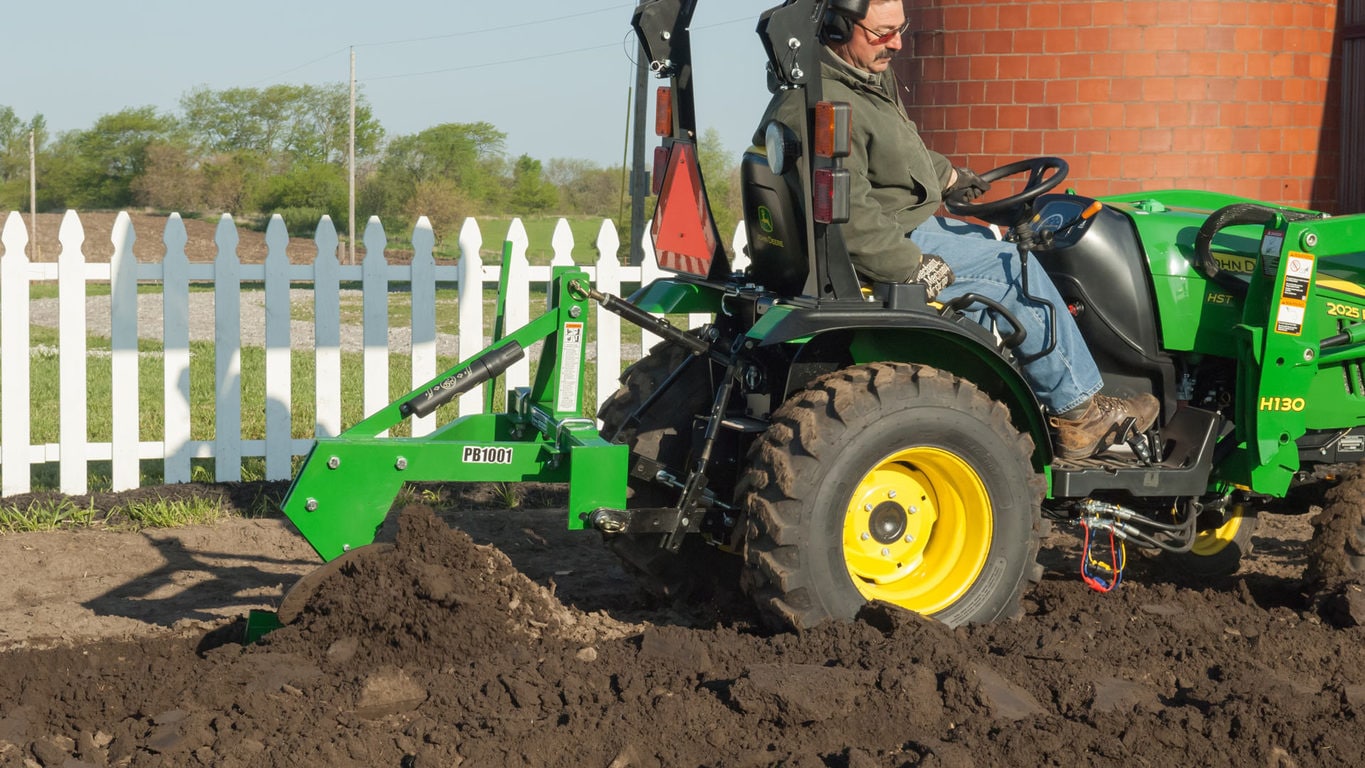
To fully appreciate the value of bucket plowing, it is helpful to compare it with conventional plowing and soil preparation techniques.
F.1. Traditional Plowing
Traditional plowing, whether using a moldboard plow, disc plow, or chisel plow, is designed to turn over large areas of soil. While effective for large-scale farming, this approach requires significant power—either from tractors or draft animals—and can lead to soil erosion, compaction, and loss of organic matter. Traditional plowing also leaves the soil bare and vulnerable to wind and water erosion until crops become established.
F.2. Hand Digging
Hand digging with a shovel or spade is the most basic method of soil preparation. While it offers precision and control, hand digging is labor-intensive and time-consuming. It is also physically demanding, making it less suitable for large areas or for those with physical limitations.
F.3. Tilling with Machines
Rototillers and other powered tillers offer a middle ground between hand digging and full-scale plowing. They are faster than hand digging but still require the operator to walk behind the machine, which can be tiring. Tilling also has the disadvantage of creating a hardpan layer beneath the tilled soil if done repeatedly at the same depth.
F.4. The Bucket Advantage
Bucket plowing occupies a unique niche in this spectrum. It is faster than hand digging, less physically demanding than operating a tiller, and far more accessible than tractor-drawn plows. While it is not suitable for large fields, bucket plowing excels in the small-scale, intensive gardening contexts where many food growers operate. Its minimal soil disturbance and low cost make it an attractive option for sustainable agriculture practitioners.
G. Practical Applications in Modern Agriculture
While bucket plowing may have started as a viral social media trend, its practical applications extend far beyond internet fame. Farmers and gardeners around the world are adopting bucket-based techniques for a variety of purposes.
G.1. Rice Paddy Planting
In Southeast Asia, bucket plowing has become a popular technique for planting rice seedlings. The bucket creates uniform holes in the paddy mud, allowing farmers to transplant seedlings quickly and efficiently. This method is particularly useful in areas where traditional plowing equipment is unavailable or too expensive.
G.2. Vegetable Gardens
Home gardeners have embraced bucket plowing for preparing vegetable beds. The technique is ideal for planting lettuce, carrots, radishes, and other crops that benefit from uniform spacing and well-aerated soil.
G.3. Orchard and Tree Planting
For planting trees and shrubs, larger buckets can be used to create planting holes of consistent size. The bucket method ensures that each tree receives the same soil conditions, promoting uniform growth across an orchard.
G.4. Urban Farming
In urban environments where space is limited and equipment storage is challenging, bucket plowing offers a practical solution. Community gardens and rooftop farms have adopted the technique as a low-cost, low-impact way to prepare growing spaces.
G.5. Educational Settings
Schools and agricultural extension programs have begun using bucket plowing as a teaching tool. It provides a hands-on way to demonstrate soil science, plant biology, and sustainable agriculture principles to students of all ages.
H. Common Mistakes and How to Avoid Them
While bucket plowing is relatively straightforward, there are several common pitfalls that can reduce its effectiveness. Being aware of these mistakes can help ensure success.
H.1. Using the Wrong Bucket
Not all buckets are created equal. Buckets with flimsy construction may crack under pressure, while buckets with very wide bases may create holes that are too large for small seedlings. Choose a bucket that is sturdy, appropriately sized, and comfortable to handle.
H.2. Working with Dry Soil
Bucket plowing is most effective when the soil has some moisture. Dry, hard soil may resist penetration, leading to frustration and potential bucket damage. Water the soil lightly before beginning, or wait until after a rain.
H.3. Compacting the Hole Walls
One of the most common mistakes is pressing too hard or twisting too aggressively, which can compact the walls of the planting hole. Compacted walls prevent roots from penetrating and can lead to stunted growth. Use gentle, steady pressure and avoid overworking the soil.
H.4. Ignoring Soil Type
Different soil types respond differently to bucket plowing. Sandy soils may collapse into the hole, while clay soils may be difficult to penetrate. Adjust your technique based on the soil you are working with, and consider adding organic matter to improve soil structure over time.
H.5. Failing to Amend the Soil
Bucket plowing creates a planting hole, but it does not improve the soil itself. For best results, amend the soil with compost or other organic matter before or after bucket plowing. This ensures that plants have access to the nutrients they need for healthy growth.
I. The Science Behind the Technique
From a scientific perspective, bucket plowing aligns with principles of conservation tillage and precision agriculture. Conservation tillage emphasizes minimal soil disturbance, retention of crop residues, and maintenance of soil organic matter. Bucket plowing disturbs only the soil immediately around the planting hole, preserving the surrounding soil structure and the microbial communities that support plant health.
Precision agriculture focuses on optimizing inputs and maximizing efficiency. Bucket plowing allows gardeners and farmers to place each plant precisely where it is needed, reducing waste and ensuring that every plant has access to adequate resources. This precision is particularly valuable in intensive growing systems where space and resources are limited.
Research on soil health has shown that minimizing tillage can lead to increased soil organic carbon, improved water infiltration, and enhanced biodiversity. While bucket plowing is not a substitute for large-scale conservation tillage practices, it embodies the same principles at a smaller scale. For home gardeners and small-scale farmers, it represents a practical way to apply conservation agriculture concepts without specialized equipment.
J. Future of Bucket Plowing
As the global population continues to grow and the demand for sustainable food production increases, techniques like bucket plowing are likely to gain even more attention. The convergence of social media, agricultural innovation, and environmental awareness has created a fertile ground for the spread of low-cost, low-impact farming methods.
Several trends suggest that bucket plowing will continue to evolve and adapt. The rise of urban farming and community gardens is creating new contexts where bucket-based techniques are particularly valuable. The growing interest in regenerative agriculture is driving demand for methods that minimize soil disturbance and promote soil health. And the ongoing digitalization of agriculture is making it easier than ever for farmers to share ideas and learn from one another.
In the future, we may see the development of specialized bucket designs optimized for specific crops or soil conditions. We may also see bucket plowing integrated into larger agricultural systems, perhaps combined with other conservation tillage practices. What began as a viral social media trend could well become a permanent fixture in the toolkit of sustainable agriculture.
K. Conclusion

Bucket plowing is more than a viral farm trick it is a testament to human ingenuity and the enduring power of simple solutions. In a world where agricultural technology often seems to grow more complex and expensive by the day, bucket plowing reminds us that sometimes the best answers are the ones that have been right in front of us all along.
From the rice paddies of Southeast Asia to the community gardens of urban neighborhoods, bucket plowing has proven its worth as a practical, affordable, and environmentally friendly method of soil preparation. Whether you are a seasoned farmer looking to reduce costs or a beginner gardener seeking an accessible way to start growing, bucket plowing offers a path forward.
As you consider incorporating bucket plowing into your own gardening or farming practice, remember that the technique is as much about mindset as it is about method. It is about looking at ordinary objects and seeing extraordinary potential. It is about working with nature rather than against it. And it is about recognizing that innovation does not always require high technology sometimes, it just requires a bucket and a willingness to try something new.