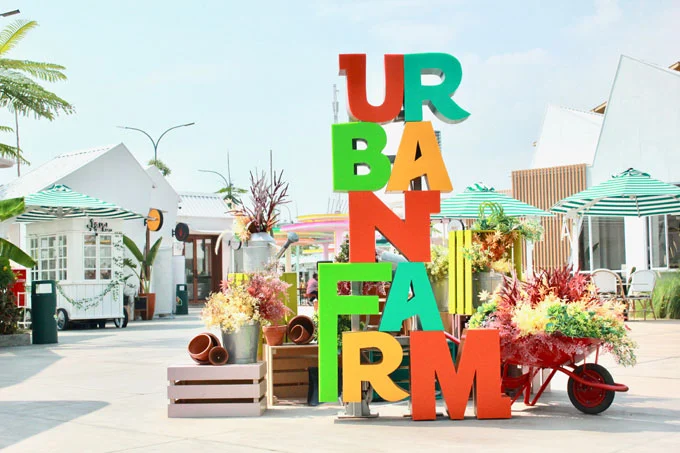
Jakarta is undergoing a quiet but profound transformation. In a metropolis long defined by towering skyscrapers and relentless traffic, an unexpected movement is taking root literally. The Jakarta Urban Farm City initiative represents a fundamental shift in how the capital approaches food security, environmental sustainability, and community resilience. What began as scattered community gardens has evolved into a coordinated, government-backed strategy to reclaim unused spaces for agricultural production, turning rooftops, idle land, and narrow alleyways into productive green zones.
This article explores the comprehensive urban farming program that is reshaping Jakarta’s relationship with food, from the ambitious targets set for 2030 to the grassroots movements flourishing in every corner of the city.
The Genesis of Jakarta’s Urban Farming Vision
The Jakarta Urban Farm City concept emerged from a stark reality. According to official data, approximately 98 percent of the capital’s food supply originates from outside Jakarta, leaving the city vulnerable to supply chain disruptions and price volatility. This dependency on surrounding regions has long been a source of concern for policymakers, particularly during periods of economic uncertainty or logistical challenges.
The COVID-19 pandemic served as a catalyst for change. When lockdowns and movement restrictions disrupted traditional food distribution networks, communities across Jakarta were forced to find alternative solutions. Residents began cultivating vegetables in whatever space was available balconies, front yards, and shared community areas. This grassroots response demonstrated that urban agriculture was not only feasible but also remarkably effective in ensuring household food availability.
Recognizing this potential, the Jakarta provincial government launched a comprehensive strategy to institutionalize and expand urban farming. The Dinas Ketahanan Pangan, Kelautan, dan Pertanian (KPKP) the city agency responsible for food security, maritime affairs, and agriculture became the primary driver of this initiative. Their mission is clear: transform Jakarta into a resilient, food-secure city where residents can produce a meaningful portion of their own food.
Ambitious Targets and Strategic Framework
The Jakarta provincial government has set an ambitious goal: by 2030, urban farming should contribute five percent of the city’s total food needs. While this figure might appear modest at first glance, it represents a significant leap from the current contribution of approximately two percent. Achieving this target requires a strategic, multi-pronged approach.
The strategy focuses on several key areas:
A. Space-Based Farming: Recognizing that Jakarta faces severe land limitations, the program emphasizes utilizing non-conventional spaces. This includes rooftops, idle government land, school compounds, neighborhood parks, and even narrow alleyways. The KPKP has identified over 1,600 urban farming locations across the city, encompassing rooftops, green alleys, dormant land, and organized farmer groups.
B. Strategic Crop Selection: Rather than attempting to grow staples like rice at scale, the program prioritizes commodities that directly impact inflation and can thrive in urban conditions. Red chili and shallots receive particular attention due to their price volatility and importance in Indonesian cuisine. These crops are well-suited for intensive cultivation and can be harvested relatively quickly.
C. Community Empowerment: The success of urban farming ultimately depends on community participation. The program invests heavily in training, technical assistance, and organizational support for farmer groups and neighborhood associations. The Dinas KPKP reports that approximately 4,000 individuals are actively involved in urban farming activities across Jakarta.
D. Cross-Sector Collaboration: The initiative brings together government agencies, private sector partners, academic institutions, and community organizations. This collaborative approach ensures that resources, expertise, and implementation capacity are effectively mobilized.
Regional Implementation Across Five Municipalities
.jpg?1624055377)
The Jakarta Urban Farm City initiative is implemented across all five administrative municipalities, each with its own unique characteristics and approaches. This decentralized structure allows for adaptation to local conditions while maintaining alignment with provincial objectives.
East Jakarta
East Jakarta has emerged as a leader in the urban farming movement. The municipality has organized simultaneous planting movements across 162 locations, covering a total area of approximately 4.7 hectares. These sites cultivate a diverse range of crops, including Bonanza MB F1 corn, rice, and various vegetables.
The municipality’s commitment to urban farming excellence was recognized at the 2026 Provincial Urban Farming Festival, where East Jakarta won first place in the Best Harvest Results category. The region also contributed to a MURI (Indonesian World Records Museum) record by displaying over 25 types of harvest products at the event.
A distinguishing feature of East Jakarta’s approach is the Pasar Tumbuh program a dedicated market where urban farmers can sell their harvests. This initiative, developed in collaboration with the Family Welfare Movement (PKK), ensures that urban farmers have a reliable outlet for their produce, creating economic incentives for continued participation.
West Jakarta
West Jakarta has developed a comprehensive program targeting 135 limited-space locations across the municipality. These sites include 56 urban farming community points, nine government office buildings, 12 school environments, and 58 Child-Friendly Integrated Public Spaces (RPTRA).
The municipality’s “Food Companion Planting Movement” focuses on crops that can complement rice as staple foods. These include sweet potatoes, cassava, corn, bananas, and porang (konjac). Between January and August 2026, West Jakarta’s urban farming initiatives produced over one ton of harvest, including honey pumpkin, corn, cassava, sweet potato, banana, and breadfruit.
A notable success story comes from Kelurahan Tangki, where a previously abandoned warehouse has been transformed into a productive garden. This innovative conversion demonstrates how even seemingly unsuitable urban structures can be repurposed for agricultural production. The Kelurahan Tangki garden has reportedly generated tens of millions of rupiah in revenue, proving that urban farming can be economically viable.
Central Jakarta
Central Jakarta has leveraged partnerships with the private sector to expand urban farming areas. The municipality manages a 4,500-square-meter private land asset in collaboration with the provincial government and local farmer groups. This site cultivates chili, bitter melon, pakcoy, and water spinach, with harvests expected to contribute to local inflation control efforts.
Additionally, smaller-scale initiatives have flourished in densely populated neighborhoods. In Kelurahan Pegangsaan, a 162-square-meter plot has been transformed into a productive garden featuring golden melons, green melons, grapes, bananas, and fish ponds for tilapia and catfish. This micro-scale approach demonstrates that urban farming can succeed even in Jakarta’s most space-constrained areas.
South Jakarta
South Jakarta has implemented a systematic approach to urban farming, conducting simultaneous harvest events across 177 locations every three months. These locations encompass RPTRA facilities, farmer groups, and independent cultivation areas across 65 neighborhoods.
The municipality’s harvests are impressive in both quantity and diversity. Recent harvests yielded 560 kilograms of cayenne pepper, 300 kilograms of eggplant, 325 kilograms of tomatoes, 800 kilograms of leafy vegetables, and 500 kilograms of fruits. Additionally, 780 kilograms of tilapia were harvested from nutrition ponds.
South Jakarta has also integrated rare plant conservation into its urban farming program. Through the “Million Rare Plants” initiative, the municipality cultivates and preserves plant species that are becoming increasingly difficult to find, including matoa and various local fruit varieties.
North Jakarta
While specific data for North Jakarta’s urban farming program is less detailed in available sources, the municipality is actively participating in the city-wide initiative. The program has reportedly engaged young people in positive activities, with some former gang members transitioning to urban farming as an alternative to street violence. This social dimension of urban farming providing constructive outlets for at-risk youth represents an often-overlooked benefit of the initiative.
The Many Benefits of Urban Farming
The Jakarta Urban Farm City initiative delivers benefits that extend far beyond food production. Understanding these multi-dimensional impacts is essential for appreciating the full value of the program.
Enhanced Food Security and Reduced Dependency
The most direct benefit is improved food security for participating households. When families can grow their own vegetables, they become less vulnerable to market fluctuations and supply chain disruptions. The Dinas KPKP emphasizes that even modest production at the household level enough to meet daily consumption needs represents a meaningful contribution to food security.
Economic Empowerment and Income Generation
Urban farming creates economic opportunities for participants. Some farmer groups have successfully commercialized their operations, generating substantial revenue. The Kelurahan Tangki garden in West Jakarta, for example, has reported revenues in the tens of millions of rupiah, demonstrating that urban agriculture can be a viable income source.
The Pasar Tumbuh markets established in East Jakarta provide urban farmers with dedicated sales channels. Additionally, the Dinas KPKP supports product development and marketing through programs like Jakarta Entrepreneurship, helping urban farmers reach broader consumer bases.
Environmental and Climate Benefits
Urban farming contributes to Jakarta’s environmental resilience in several ways:
A. Temperature Reduction: Plants provide shade and evapotranspiration, which can lower ambient temperatures in surrounding areas. This is particularly valuable in Jakarta, where the urban heat island effect intensifies during dry seasons. The presence of vegetation prevents direct sunlight from heating paved surfaces and building materials, contributing to a more comfortable microclimate.
B. Improved Air Quality: Plants absorb carbon dioxide and release oxygen while filtering particulate matter from the air. In a city with significant air quality challenges, every green space contributes to cleaner, healthier air.
C. Stormwater Management: Urban gardens can absorb rainfall and reduce surface runoff, helping to mitigate flooding risks. This is especially important in Jakarta, where flooding has been a persistent challenge.
D. Waste Reduction: Many urban farming initiatives incorporate composting and organic waste processing. The Kemanggisan community garden project, for example, taught residents to ferment household organic waste into eco-enzymes for cleaning and gardening purposes.
Social and Community Benefits
Urban farming strengthens community bonds and creates opportunities for positive social interaction. When neighbors work together to cultivate shared spaces, they build relationships and a sense of collective ownership. This social cohesion has value beyond agriculture itself.
For youth, urban farming provides educational opportunities and constructive activities. The Urban Garden 58 in Kebagusan, South Jakarta, serves as an educational space where young people learn about food production, resource management, and sustainable practices. The initiative collaborates with community groups, corporate volunteers, and youth organizations to promote food independence awareness.
Health and Nutrition Improvements
Access to fresh, chemical-free produce directly benefits participants’ health. Urban farmers can harvest vegetables at peak ripeness, maximizing nutritional value. The physical activity involved in gardening also promotes fitness and well-being.
Challenges and Obstacles
Despite its successes, the Jakarta Urban Farm City initiative faces significant challenges that must be addressed for continued growth and sustainability.
Land Scarcity and Competition
Land availability remains the primary constraint. Jakarta’s limited open spaces are under constant pressure from development, and urban farming competes with other land uses. The KPKP acknowledges that land limitations are the biggest challenge, though they maintain that even small spaces can be productive with proper techniques.
The government is addressing this challenge through several strategies:
A. Asset Inventory: The Dinas KPKP is systematically inventorying idle government land that could be repurposed for agriculture. Preliminary estimates suggest over five hectares of potential land across various locations.
B. Regulatory Protection: Governor regulations are being developed to protect existing urban farming areas from conversion to other uses. The governor has emphasized that certain green spaces must be maintained for community benefit.
C. Vertical and Rooftop Solutions: The program increasingly emphasizes space-efficient techniques like hydroponics, verticulture, and rooftop farming that maximize production per unit area.
Climate and Weather Extremes
Jakarta’s tropical climate presents both opportunities and challenges for agriculture. While year-round growing seasons are possible, extreme weather events including heavy rains, flooding, and extended dry periods can devastate crops.
Urban farmers in Lenteng Agung, South Jakarta, experienced this firsthand when flooding destroyed their newly planted crops. The community had to rebuild drainage systems and water infrastructure to prevent future losses.
The anticipated El Niño phenomenon poses particular risks. East Jakarta officials have urged farmers to implement more intensive maintenance practices to protect crops during hot, dry periods.
Technical Knowledge and Capacity Gaps
Many urban farmers lack formal agricultural training. Research on community-based urban farming in Cempaka Putih, Central Jakarta, identified low public knowledge about modern farming techniques as a significant obstacle. Addressing this gap requires sustained investment in training, extension services, and knowledge sharing.
Water Access and Infrastructure
Reliable water access is essential for urban agriculture but not always available. Some community gardens rely on rainwater harvesting or manually carry water from distant sources. The Lenteng Agung farmer group, for example, initially depended on members bringing water from their homes before they could construct wells and install pumping systems.
Rooftop-Specific Challenges
While rooftops offer valuable growing space, they present unique challenges. Strong winds and intense heat can damage plants and structures. Rooftop farming requires careful plant selection choosing species with shallow root systems that tolerate heat and wind, such as lettuce, spinach, water spinach, and melons.
Structural considerations are also important. Rooftop gardens must be designed to safely support the weight of soil, water, and plants without compromising building integrity.
Technology and Innovation in Urban Farming
The Jakarta Urban Farm City initiative embraces technological solutions to overcome space and resource constraints.
Hydroponics and Soilless Cultivation
Hydroponic systems, which grow plants in nutrient-rich water rather than soil, are increasingly popular in Jakarta’s urban farming. These systems use less water than traditional agriculture and can be stacked vertically to maximize space efficiency. The KWT Buaran Citra Lestari in East Jakarta, supported by the BRInita program, employs hydroponic methods alongside verticulture and wall gardening techniques.
Verticulture and Wall Gardening
Vertical growing systems allow urban farmers to cultivate plants on walls and vertical structures. This approach is particularly valuable in densely built neighborhoods where horizontal space is extremely limited.
Smart Farming Technologies
The BRMP Jakarta (Greater Jakarta Agricultural Application and Modernization Board) is advancing agricultural modernization through technology development and expanded consultation services. Their initiatives include seed activities for rice and red onions, along with other national strategic programs.
Digital Marketing and E-Commerce
Urban farmers are increasingly using digital platforms to market their products. The Dinas KPKP encourages farmers to adapt to technological developments and digital marketing strategies to reach broader consumer bases.
The Role of Community Organizations and Partnerships
The success of Jakarta’s urban farming initiative depends heavily on community participation and multi-stakeholder partnerships.
Family Welfare Movement (PKK)
The PKK plays a central role in mobilizing communities and implementing urban farming programs. As a grassroots organization with networks extending to the neighborhood level, the PKK is uniquely positioned to engage families and promote participation.
Farmer Groups (Kelompok Tani)
Farmer groups serve as the organizational backbone of urban farming. These groups pool resources, share knowledge, and coordinate activities. The Seven LA Garden in Lenteng Agung, for example, brings together 13 residents who collectively manage a 2,700-square-meter garden.
Academic Institutions
Universities contribute research, training, and community engagement. BINUS University’s “No Farms, No Future” project in Kemanggisan, West Jakarta, demonstrates how academic institutions can partner with communities to develop sustainable urban gardens. International students and local residents collaborated to transform limited urban space into a productive community garden, using recycled materials and locally relevant crops.
Private Sector and Corporate Social Responsibility
Corporate support provides resources and infrastructure for urban farming initiatives. Bank Rakyat Indonesia (BRI) through its BRInita program has assisted farmer groups like KWT Buaran Citra Lestari, providing greenhouse construction and other infrastructure support.
The Road Ahead: Future Plans and Expansion
The Jakarta Urban Farm City initiative continues to evolve and expand. Several key developments are on the horizon.
Regulatory Framework Development
The Dinas KPKP is finalizing regulations to provide a legal foundation for the widespread planting of rice-companion crops. This instruction from the Regional Secretary is expected to accelerate the movement’s implementation across all Jakarta regions.
Urban Farming Festival
The 2026 Urban Farming Festival at Istora Senayan showcased modern agricultural technologies and products from across Jakarta. The event included talkshows, training sessions, and exhibitions, serving as a platform for knowledge exchange and public engagement.
Target Expansion
The goal of achieving five percent food self-sufficiency by 2030 requires significant expansion of current efforts. The KPKP is optimistic that with continued collaboration between government, communities, and private sector partners, this target is achievable.
Scaling Successful Models
Successful models developed in specific neighborhoods can be replicated elsewhere. The Kelurahan Tangki warehouse-to-garden conversion, the Pasar Tumbuh market system, and the community education approach of Urban Garden 58 all offer templates that can be adapted to other areas.
Conclusion: A Model for Sustainable Urban Development

The Jakarta Urban Farm City initiative represents more than just an agricultural program. It embodies a vision of urban development that prioritizes sustainability, resilience, and community well-being. By transforming unused spaces into productive gardens and empowering residents to grow their own food, Jakarta is building a more food-secure, environmentally sustainable, and socially cohesive city.
The challenges are significant land scarcity, climate risks, and technical capacity gaps cannot be ignored. But the progress achieved thus far demonstrates that urban agriculture is not merely an idealistic concept but a practical solution with measurable results. From the simultaneous planting movements across East Jakarta to the community gardens of Kemanggisan, from the rooftop farms of West Jakarta to the educational gardens of South Jakarta, a green revolution is taking root.
As Jakarta approaches its fifth century and aspires to become a global city, the Urban Farm City initiative offers a model for how metropolises can address food security while improving quality of life for their residents. The seeds have been planted. The harvest, both literal and figurative, promises to nourish the city for generations to come.